
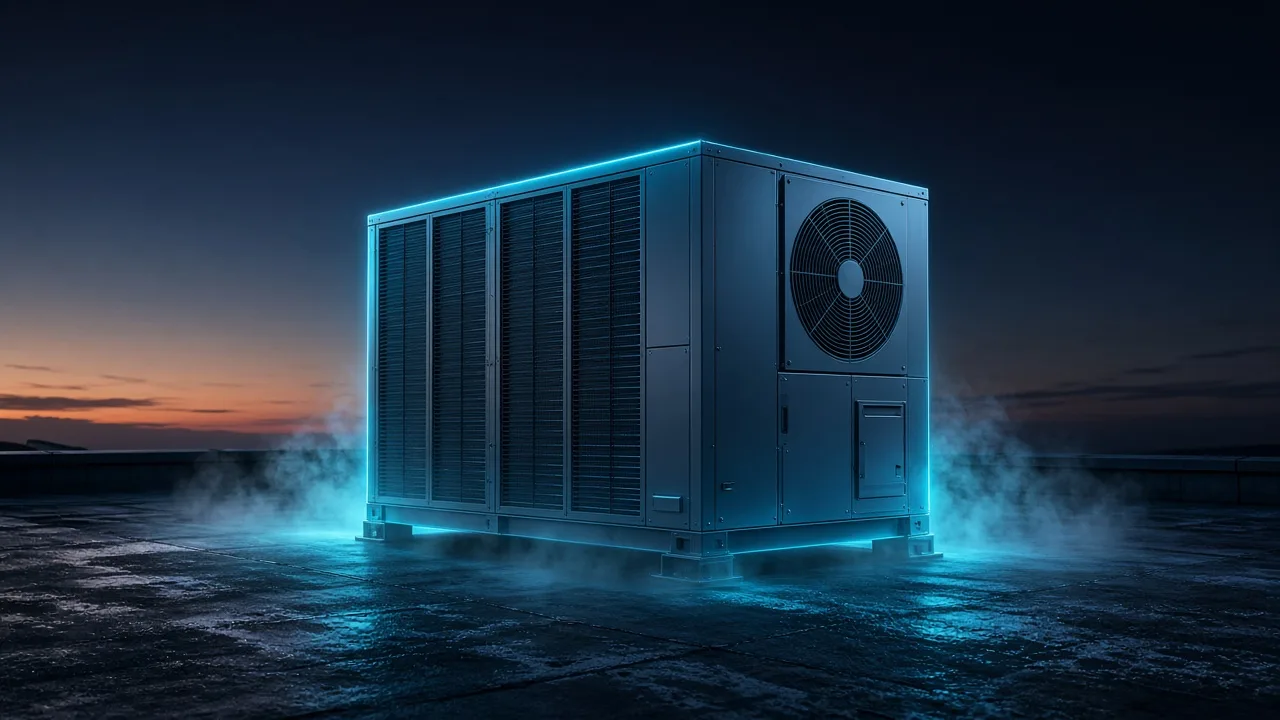
Commercial HVAC Maintenance in Snellville, GA
Filters, belts and coils fail quietly. A rooftop unit maintained in spring is ready for the first hot week.
Ask about a maintenance plan (678) 778-6648
- Measured firstBefore anything is recommended
- Snellville, GAGwinnett County and nearby
- 20 yearsOwner’s time in the trade
Pierre Refrigeration Services maintains commercial HVAC for businesses, schools and restaurants in Snellville and Gwinnett County: rooftop units, split systems, heating and ventilation. A maintenance visit changes filters, checks belts, cleans coils and condensate drains, tests cooling and heating, and checks the controls: the work that keeps a unit from failing in the first week of a heat wave.
What HVAC maintenance prevents
These are the failures maintenance catches early, before a hot week or a cold morning finds them for you.
- A clogged filter starving the unit of air until the coil freezes
- A worn belt that slips, then snaps, on the first hot afternoon
- A blocked condensate drain overflowing into a ceiling
- A dirty condenser coil pushing the compressor to run hot
- Heating that will not light on the first cold morning of the year
- Controls that heat or cool an empty building all weekend
What an HVAC maintenance visit looks at
-
Filters
Checked and changed; a clogged filter is behind more frozen coils than anything else.
-
Belts and motors
Belts checked for wear and tension, motors and bearings for noise and heat.
-
Coils and drains
Condenser and evaporator coils cleaned, condensate drains kept clear.
-
Cooling and heating
Refrigerant pressures and temperature split on the cooling side; burners, ignition and heat exchanger on the heating side.
-
Ventilation
Make-up air and fresh-air dampers checked, so the building breathes as it should.
-
Controls
Thermostats and schedules checked against the hours the building is actually used.
Measured every visit, so nothing is replaced early
Each visit measures the unit rather than just looking at it, so one that is losing capacity shows up before it fails. A unit losing capacity usually needs a part or a cleaning, not a replacement.
When a unit is near the end of its life, you hear about it while there is still time to plan the replacement for a quiet season.
Want maintenance scheduled rather than remembered?
A maintenance plan puts these visits on a schedule, so nobody has to remember them.
Maintenance for how your building is used
-
Restaurants
Rooftop units over a kitchen run in grease-laden air, so filters and coils need attention more often than on an office.
-
Stores and offices
Cooling equipment needs to be right before the heat arrives, and heating before the first cold morning.
-
Schools
Bigger work on classroom and gym units fits the summer break, when the building empties.
What happens after you ask
-
Tell us what you have
The units, roughly how old they are, and how many sites.
-
A visit
Each unit is cleaned, measured and checked.
-
Findings
You see what was found, unit by unit.
-
Repairs only with approval
Anything that needs a part is quoted first; nothing is replaced without your say.
Where we work
Questions operators actually ask
- How often should commercial HVAC be maintained?
- Most buildings need HVAC maintenance twice a year: cooling before the heat arrives and heating before the cold. Rooftop units over a commercial kitchen need more, because the air they pull in shortens filter and coil life.
- What does HVAC maintenance include?
- HVAC maintenance covers filters, belts, coils and condensate drains, cooling and heating checks, ventilation dampers, and the controls. Anything that needs a part is quoted before it is done.
- Do you maintain heating as well as cooling?
- Heating is part of HVAC maintenance: burners, ignition, the heat exchanger and the controls are checked so the building holds heat on the first cold morning.
- Is there a maintenance plan?
- Pierre Refrigeration Services offers maintenance plans for commercial HVAC. A plan is set up around your equipment and number of sites, so the starting point is what you run.
Other commercial HVAC services
-
Commercial HVAC Service & Repair
When something has stopped working: the symptom, the diagnosis, the repair.
-
Commercial HVAC Installation & Replacement
Rooftop units, split systems, heating, ventilation and controls, supplied and installed, with the old system measured first.
-
Commercial Rooftop Unit Maintenance for Restaurants
-
Why Your Commercial Kitchen Is Too Hot (And Why It Is Usually Not the AC)
Before the next breakdown: talk to us about maintenance
Tell us the equipment and how many sites, and we will talk through what maintenance would look like.